Have you ever stepped inside after a sunny afternoon and struggled to see clearly for a few moments? Or found yourself squinting against bright headlights while driving at night? Your eyes constantly respond to changes in light, but sometimes they need extra time to catch up.
At Athens Eye Care Center, we use comprehensive eye care to help patients in Athens, AL understand changes in their vision and what those changes may mean for their eye health. Several factors, from natural aging to certain eye conditions, can affect how quickly your eyes adjust between light and dark.
How Do Your Eyes Adjust Between Light and Dark?
Your eyes work constantly to help you see in different lighting conditions. When you step into bright sunlight, your pupils constrict to limit how much light enters your eyes. In darker spaces, your pupils widen to let in more light. These changes happen automatically, helping your eyes respond to your surroundings.
Your retina, the light-sensitive tissue at the back of your eye, also plays an important role. It contains two types of cells: cones, which help you see colors and fine details in brighter light, and rods, which help you see in dim conditions. When you move from a bright area into a dark room, your rods gradually become more sensitive to light.
This process, called dark adaptation, can take 20 to 30 minutes or longer to reach its full effect. Your eyes typically adjust to brighter light much faster.
Common Reasons Your Eyes Take Longer to Adjust
Your eyes may take longer to adjust to lighting changes for several reasons. Some changes happen naturally as you age, while others may relate to your overall health, medications, or eye conditions. Knowing what affects light adaptation can help you recognize changes worth discussing with your eye doctor.
1. Natural Changes in Your Eyes With Age
As you get older, your pupils tend to become smaller and respond more slowly to changes in light. Retinal cells may also become less efficient at adapting to darkness. These changes can make it harder to see when you enter a dim restaurant, walk down a dark hallway, or drive after sunset. Many adults notice these differences in their 50s, 60s, and beyond.
2. Cataracts and Cloudy Vision
Cataracts develop when the eye's natural lens becomes cloudy, scattering light as it enters the eye. This can make bright headlights appear more glaring and reduce contrast in dim environments. You might notice more difficulty driving at dusk or seeing clearly when moving between bright and shaded areas. Cataracts usually develop gradually, so regular eye exams can help track changes in your vision.
3. Changes in Retinal Health
Your retina plays a central role in helping your eyes adapt to darkness. Conditions that affect retinal cells, including age-related macular degeneration and certain inherited retinal diseases, can make seeing in low light more difficult. Some people notice that objects become harder to distinguish in dim rooms or that they need brighter lighting to read comfortably. Our eye doctor can examine your retina for changes that may affect your vision.
4. Medications and Health Conditions
Certain medications can affect pupil size, light sensitivity, or how comfortably your eyes respond to different lighting conditions. Health conditions such as diabetes may also affect the retina and contribute to changes in night vision. If you've noticed slower light adaptation after starting a medication or experiencing health changes, share that information at your next eye exam. It can help our eye doctor better understand your symptoms.
5. Bright Lights and Everyday Environments
Sometimes, the lighting itself explains why your eyes need extra time to adjust. After spending time outdoors in strong sunlight, your eyes may need several minutes to adjust to a darker setting. Bright screens, overhead lights, and oncoming headlights can also make transitions between light and dark more noticeable. Give your eyes time to adjust, and use appropriate lighting, to make everyday activities more comfortable.
When Is Slow Light Adaptation a Cause for Concern?
If your eyes take longer than usual to adjust between light and dark, or if night driving becomes more difficult, schedule an eye exam. Also discuss increased glare, trouble seeing in dim spaces, and frequent vision changes with our eye doctor.
Sudden vision loss, flashes of light, many new floaters, or a dark shadow across your vision require urgent eye care. These symptoms may indicate a serious eye condition.
How a Comprehensive Eye Exam Can Help
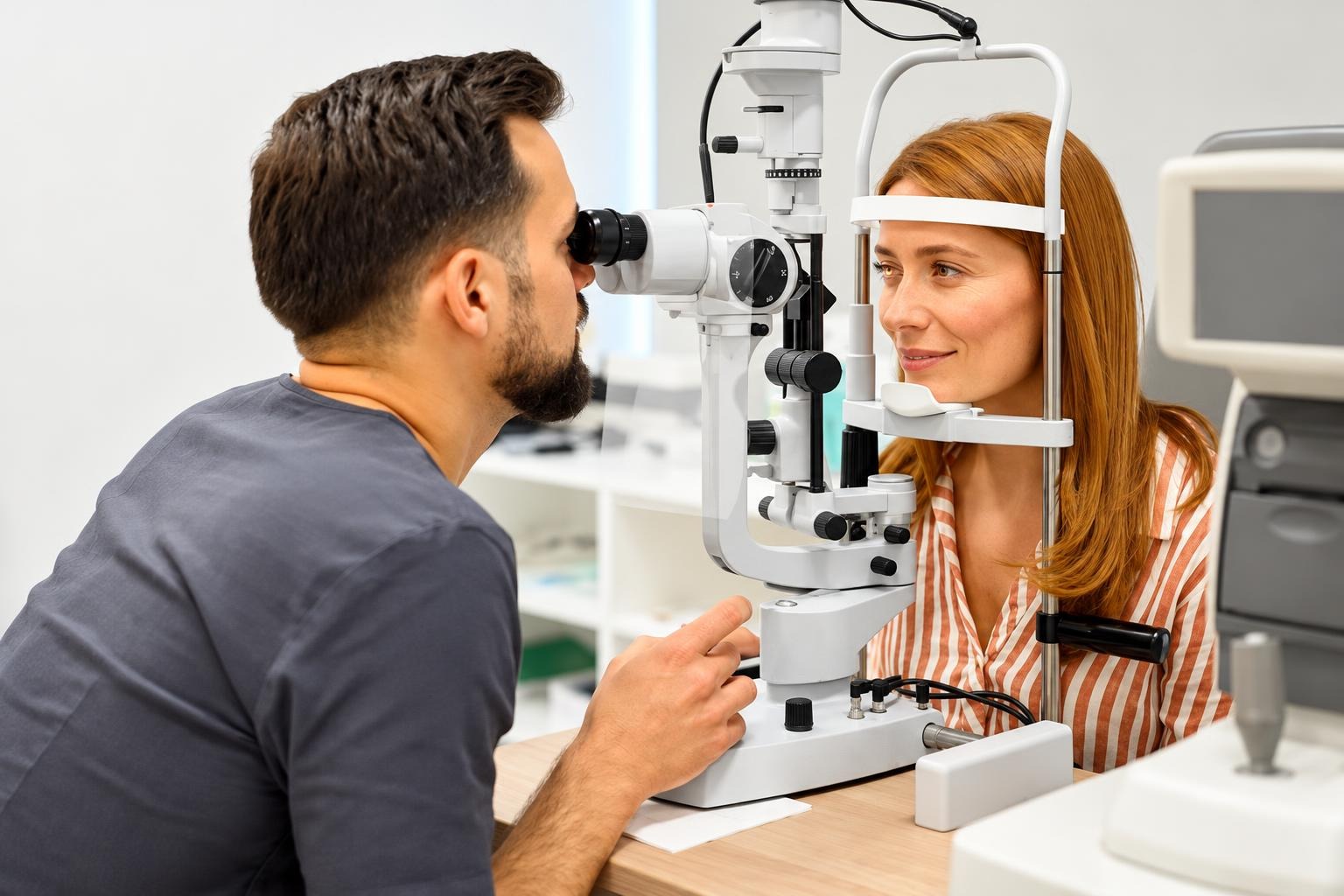
A comprehensive eye exam can help identify changes in your eye health that may affect how quickly your vision adjusts to light and dark. At Athens Eye Care Center, our eye doctor can assess several factors, including:
- Pupil response: Checking how your pupils react to changes in light.
- Lens clarity: Looking for cataracts that may cause glare or reduce vision in dim settings.
- Retinal health: Examining the back of your eyes for signs of conditions that may affect low-light vision.
- Overall vision: Checking your prescription and assessing how clearly you see at different distances.
These findings help our eye doctor recommend the right next steps based on your symptoms and eye health.
See More Comfortably in Changing Light in Athens, AL
Clear, comfortable vision helps you move through your day with confidence, whether you're enjoying the sunshine or driving home after dark. At Athens Eye Care Center, our eye doctor provides personalized eye care to help patients in Athens, AL understand changes in their vision and protect their eye health. If your eyes take longer to adjust between light and dark, schedule a comprehensive eye exam with our team today.
Light & Your Eyes FAQs
Why Do My Eyes Take Longer to Adjust to Darkness?
Your eyes need time to become more sensitive to light after leaving a bright environment. This process, called dark adaptation, can take 20 to 30 minutes or longer to reach its full effect. Aging, cataracts, and certain retinal conditions may slow the process.
Does Age Affect How Quickly My Eyes Adjust to Light?
Yes. As you age, your pupils tend to become smaller and respond more slowly to changes in lighting. Your retina may also become less efficient at adapting to darkness, making activities like night driving more challenging.
Can Cataracts Make It Harder to See at Night?
Yes. Cataracts cloud the eye's natural lens, scatter incoming light, and reduce contrast. This can make headlights appear brighter and objects harder to distinguish in dim environments.